
Your jobs and human resources news reporter
Provided by AGP
Australian Businesses Shift From Stock Photography to Custom Team Imagery

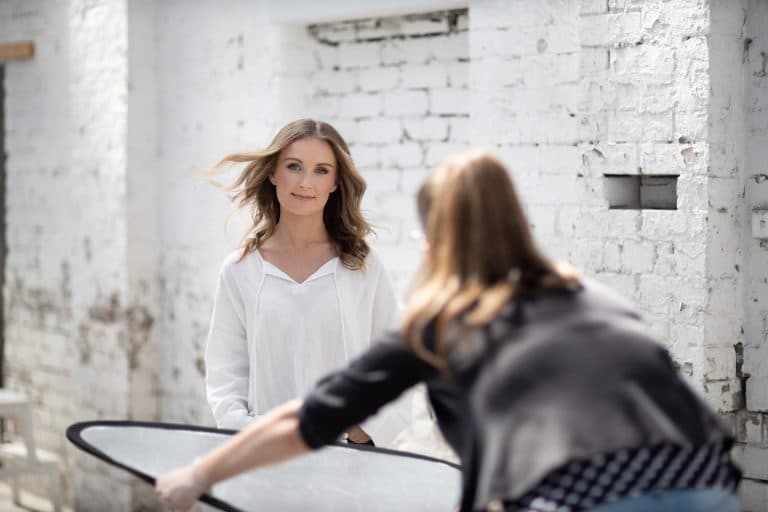
Australian businesses ditch stock photos for custom imagery to boost trust, authenticity, and brand consistency in a competitive, AI-driven market.
NEW SOUTH WALES, AUSTRALIA, May 15, 2026 /EINPresswire.com/ -- A growing number of Australian businesses across Sydney, Melbourne, and Brisbane are retiring their stock photo libraries in favour of custom photography of their own teams, as buyers, candidates, and partners increasingly judge companies by the authenticity of their imagery.In many modern offices, the same set of polished strangers stares out from competitor websites: the woman with the headset, the diverse team huddled around a laptop, the executive shaking hands in a meeting. These images appear so often they have stopped registering as people at all. They have become visual wallpaper.
That fatigue is starting to show up in marketing budgets. For the firms making the switch, it’s not a vanity exercise. It’s a response to how buyers, candidates, and partners now evaluate businesses online, and to a marketplace where authenticity is starting to do real commercial work.
The credibility problem with stock
A decade ago, a slick stock photo on a homepage signalled professionalism. Today it often does the opposite. Reverse image searches make detection trivial. Anyone curious enough to right-click can see the same “team” turning up on a dental clinic in Brisbane and an SaaS company in Berlin. LinkedIn feeds expose duplicates instantly. And the rise of AI-generated imagery has made anything that looks suspiciously generic feel suspect by default.
The cost of all this is more than aesthetic. When a prospect lands on an “About Us” page and sees recycled smiles, the implicit message is that the company didn’t care enough to show its real work. For industries where trust drives the sale, like law, finance, consulting, and healthcare, this is a problem worth fixing.
What custom photography actually solves
Custom imagery does a few things stock can’t. It puts faces to names before the first meeting, which shortens the relationship-building curve. It signals investment, since clients and recruits both read into whether a business has bothered to present itself properly. And it gives marketing and sales teams a consistent visual language across LinkedIn, pitch decks, proposals, the website, and recruitment campaigns. Without that consistency, a brand fragments the moment it leaves its own homepage.
The shift is most visible in Sydney’s commercial corridors, particularly the CBD, North Sydney, Parramatta, and Chatswood, where the pressure to differentiate is highest. But it’s spreading well beyond there. Even smaller firms are realising that a single afternoon of professional photography can produce a year or more of usable assets across every channel they run, which changes the cost calculus considerably.
Real isn’t the bar anymore
It would be misleading to call this a sudden shift. Better-resourced companies have been commissioning their own photography for years. What’s changed is that the gap between the businesses that bother and the ones that don’t has become impossible to hide. AI has accelerated that further. With synthetic imagery now everywhere, audiences have become unusually good at spotting whatever looks staged, generic, or off, even when they couldn’t articulate why.
The standard has quietly moved to commercial-grade imagery where the people in the frame look like they actually mean business: composed, present, properly lit, and unmistakably themselves.
That last part is where most workplace photography quietly falls apart. Composition can be taught. Lighting is a technical skill. Mood and emotion can be directed. But getting people to look genuinely engaged without looking like they’re performing engagement is the hardest part of the craft, and it’s where the bulk of corporate photography ends up: close, but not quite. The result is a shoot that’s technically competent and commercially flat.
It’s tempting to read this as an argument against polish. It isn’t. Image quality registers within a fraction of a second, and audiences attribute that quality directly to the business behind it, for better and for worse. A poorly-lit, awkwardly-composed shot doesn’t read as charmingly authentic. It reads as a business that doesn’t care how it presents itself. High production values send the opposite signal, and that signal does commercial work.
The craft is in making polish and authenticity coexist rather than choosing between them. Over-finished imagery can quietly position a brand as premium when premium isn’t where it competes, which is a real problem for a business trying to look approachable rather than exclusive. The shots that actually deliver manage to be technically excellent and visually relaxed at the same time. They look like someone walked past and caught a moment already happening, but they were lit, composed, and directed within an inch of their life to make that look possible.
The brief matters more than the camera
The companies getting real value from this aren’t simply hiring a photographer and lining the team up against a wall. They’re starting with the brief: who is this for, what should it make them feel, and how does this sit alongside the rest of the brand?
HERO SHOT Headshot Photography, based on Parramatta Road in Petersham, runs each engagement this way. A pre-shoot conversation covers the client’s audience, tone, wardrobe, and the kind of environments that match the message, whether clean studio, working office, or on-location. A law firm in the CBD needs something different from a tech startup in Chatswood, and a graduate-recruitment campaign needs something different again from a board portrait.
The output isn’t just headshots, either. Workplace and environmental photography captures the actual space and energy of a business, which is increasingly what candidates and clients want to see before they commit to anything. Group photography, editorial portraits, and personal branding shoots fill out the library.
Planning for the long haul
There’s a quiet objection to custom photography that doesn’t get raised often enough: what happens when people leave? It’s a real risk. A homepage hero shot built around an executive who’s now at a competitor isn’t an asset anymore. It’s a liability, and one that usually gets replaced in a hurry and badly.
The way around this isn’t to avoid putting people in the imagery. It’s to plan the shoot properly from the start. The principle is straightforward: a business should build its “hero” assets, the ones doing the heaviest visual lifting on the homepage, key landing pages, and headline marketing, around the people most likely to still be there in five years. Founders. Long-tenured leadership. People whose presence in the business is structural rather than transitional. Then enough variation should be captured around them, with different settings, supporting team imagery, and broader environmental shots, so that individual departures don’t pull the whole library out from under the business.
Done this way, photo libraries last far longer than most marketing teams assume. HERO SHOT has clients still actively using imagery shot more than ten years ago, because the shoots were structured for longevity from the brief stage rather than treated as a one-off marketing job. That’s the difference between photography as an expense and photography as an asset, and it’s almost entirely a planning question, not a budget one.
The broader shift
Stock photography isn’t going away. It still has a place for illustrating abstract concepts and filling background slots where nothing else will do. But for the parts of a business that represent real people doing real work, the trade has tipped. Audiences have got better at spotting the difference between staged stock and the genuine article, and they’re rewarding the genuine article with attention and a willingness to engage.
For Australian brands trying to stand out in crowded markets, that’s no longer a marketing trend. It’s closer to the new baseline.
About HERO SHOT Headshot Photography
HERO SHOT Headshot Photography has specialised in headshots and corporate imagery for over a decade, working with clients across Sydney, Melbourne, Brisbane, and other major Australian cities. Services include individual professional headshots, corporate headshot sessions, editorial portraits, workplace photography, and personal branding photography. The studio’s approach focuses on bringing out each subject’s natural strengths while keeping the imagery aligned with the client’s broader brand.
Sammer Affridi
HERO SHOT Photography
+61 421 048 722
email us here
Visit us on social media:
LinkedIn
Instagram
Facebook
Legal Disclaimer:
EIN Presswire provides this news content "as is" without warranty of any kind. We do not accept any responsibility or liability for the accuracy, content, images, videos, licenses, completeness, legality, or reliability of the information contained in this article. If you have any complaints or copyright issues related to this article, kindly contact the author above.
